




Bio of a Space Tyrant
science fiction
Series · science fiction
The Ender's Game series by Orson Scott Card has 6 books and is best read in publication order, starting with Ender's Game (1985).
Start here: Ender's Game (1985) — then read straight through in publication order.
The order the books were released — the default way to read the series.
The order the story's events happen in, novellas slotted where they belong.
Andrew "Ender" Wiggin is six years old when he's recruited into Battle School, an orbiting military academy built to find and train the child who can save humanity from a third invasion by the alien "Buggers." Ender is a prodigy the adults running the program are willing to isolate, manipulate and break in order to shape into a commander — and the story is as much about what that does to a brilliant, lonely child as it is about the tactical war games he keeps winning. The final twist of Ender's Game recontextualizes everything that came before it and is one of science fiction's most famous gut-punches.
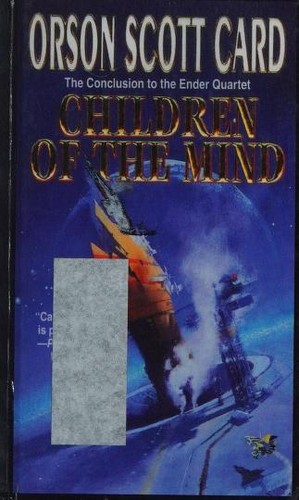
The sequels take a hard left turn from military SF into something slower and more philosophical: Speaker for the Dead jumps decades ahead to Ender, now an adult carrying the guilt of what he did as a child, acting as a truth-telling "speaker" at the funeral of a murdered scientist on a world with its own first-contact crisis. Xenocide and Children of the Mind continue that arc into questions of personhood, philosophy of mind, and genocide's aftermath. Ender in Exile, written decades later, is a direct sequel to Ender's Game that fills the gap before Speaker for the Dead begins. It's a series for readers who want SF that starts as a gripping child-genius war story and keeps getting stranger and more morally serious with every book.
The core Ender Saga is four novels — Ender's Game (1985), Speaker for the Dead (1986), Xenocide (1991) and Children of the Mind (1996) — plus two later side stories, A War of Gifts (2007) and Ender in Exile (2008), for six books total. A separate parallel Shadow series follows Bean and isn't counted here.
Start with Ender's Game, then Speaker for the Dead, Xenocide and Children of the Mind in publication order. Fit in Ender in Exile right after Ender's Game if you want story chronology, since it's set in the gap before Speaker for the Dead; A War of Gifts can be read alongside Ender's Game any time.
No. The Shadow series (Ender's Shadow and its sequels) retells and continues the story from the perspective of Ender's classmate Bean rather than Ender himself. It runs in parallel to this series and can be read independently, in either order relative to it.
The core four-book arc has been complete since 1996, and no new mainline Ender novel has been announced since Ender in Exile (2008). Orson Scott Card has continued to write in the wider Enderverse via the Shadow series and short fiction.
Yes — it was written to work as a complete, self-contained novel, and many readers stop there. The sequels shift genre and tone significantly, from military SF to a slower philosophical story, so it's fine to treat Ender's Game as standalone if that's not what you're looking for.
Reading order last verified .


